

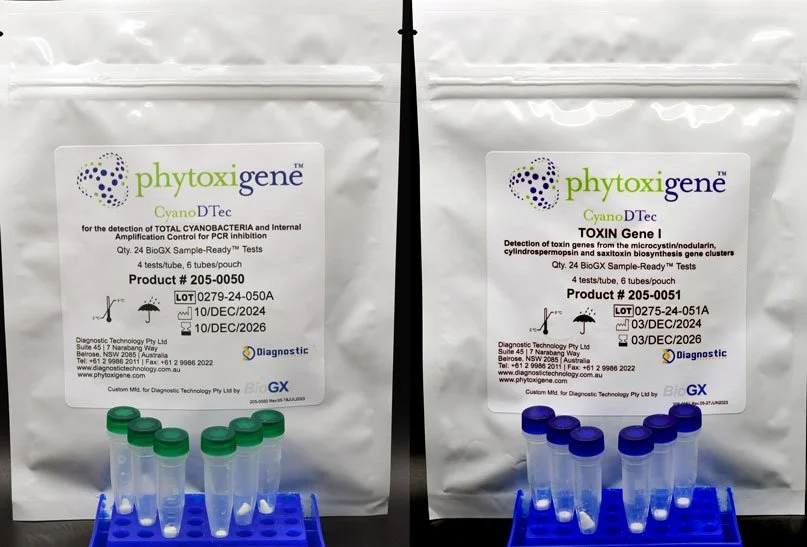
Phytoxigene™ CyanoDTec is a molecular (DNA) based technology (Real Time PCR) that detects and quantifies the presence of Cyanobacteria (a.k.a. blue green algae) and their toxin producing genes in aquatic environments. Not all Cyanobacteria produce toxins; the presence of an algal bloom does not confirm or deny toxicity. The Phytoxigene™ test quantitates both the amount of overall Cyanobacteria present in a water sample and the number of genes responsible for the production of the toxins. There is a direct correlation between bloom toxicity and the number of genes responsible for toxin production.
Phytoxigene provides an alternative to currently available toxin testing methods which are incompatible with most laboratory operations. Toxin testing is often considered tedious, time consuming and unreliable. Testing done via LC-MS is accurate but extremely expensive and often takes 2 weeks for results. Phytoxigene’s low cost kits provide confirmation of toxin producing genes within 2 hours. The kits are straightforward to use after a 1/2 day training.
Instructional Video of the CyanoDTec™ Assay Procedure
Toxins associated with blue green algae are either hepatatoxins (cause damage to the liver) and neurotoxins (cause neurological damage). The hepatatoxins include microcystin, nodularin and cylindrospermopsin while saxitoxin, anatoxin and guanitoxin are the primary neurotoxins produced by Cyanobacteria.
Download Full Product List
205-0050 Total Cyanobacteria Assay; 16s/Internal Amplification Control
205-0051 Toxin I Assay; Microcystin (mcyE), cylindrospermopsin (cyrA) and saxitoxin (sxtA) producition genes
720-0234 Positive Control for Toxin II assay

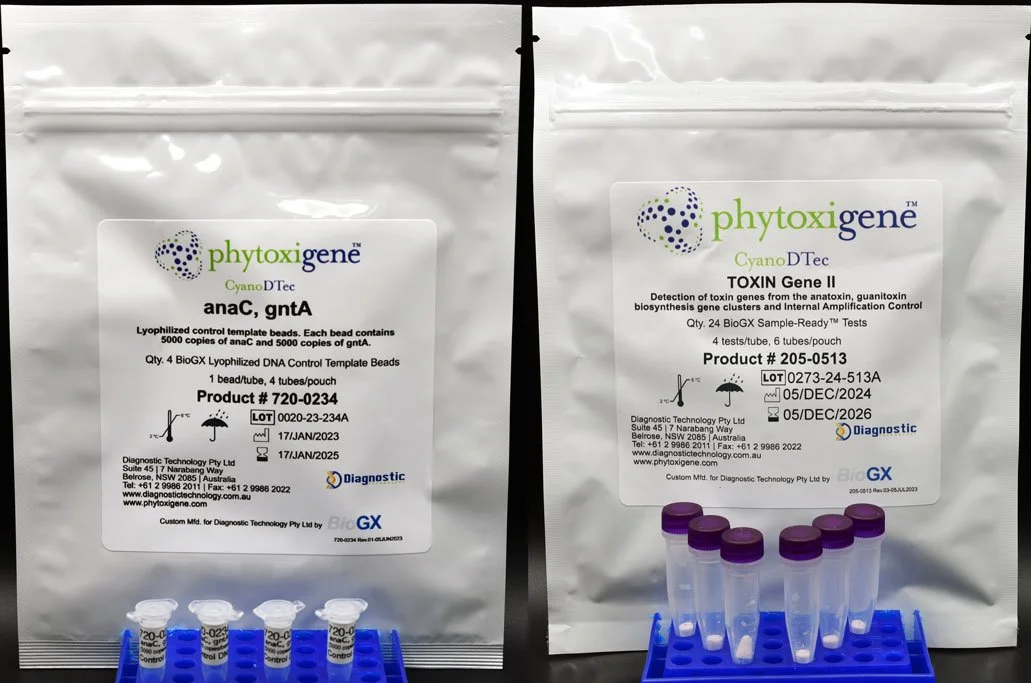
Phytoxigene™ CyanoNAS are Nucleic Acid Standards for the CyanoDTec kit. The standards are accurate and standardised concentrations of the target genes used in the CyanoDTec test. The standards were commissioned and developed by the National Measurement Institute (NMI), a Division of the Australian Department of Industry and a participant in the International Bureau of Weights and Measures (BIPM) Consultative Committee for Amount of Substance (CCQM). There are 5 standards in each kit 100, 1,000, 10,000 and 1,000,000 copies per reaction for the 16s ribosomal RNA gene of Cyanobacteria, and for each biotoxin gene target that is responsible for the production of microcystin and nodularin (mcyE/ndaF) , cylindrospermopsin (cyrA) and saxitoxin (sxtA). The reference material has been designed to verify and/or validate methodologies for detecting toxin producing cyanobacteria using DNA-based technology.

Phytoxigene™ DinoDTec: is a molecular (DNA) based technology (Real Time PCR) that detects and quantifies the presence of sxtA genes from saxitoxin producing Dinoflagellates in marine environments. The assay is designed for the screening of environmental samples to identify potential blooms of PSP dinoflagellates. The abundance of sxtA genes has been shown to correlate with the abundance of the saxitoxin-producing species. Detection and quantification of sxtA in HAB events has been correlated with saxitoxin uptake in shellfish.
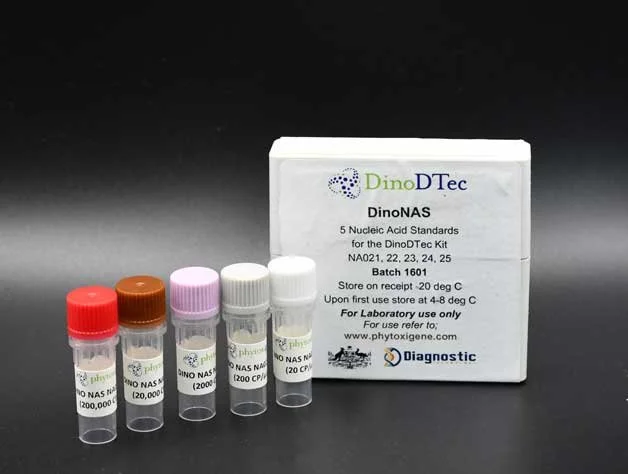

Phytoxigene™ DinoNAS are Nucleic Acid Standards for the DinoDTec kit. The standards are accurate and standardised concentrations of the target genes used in the DinoDTec test. The standards were commissioned and developed by the National Measurement Institute (NMI), a Division of the Australian Department of Industry and a particpant in the International Bureau of Weights and Measures (BIPM) Consultative Committee for Amount of Substance (CCQM). There are 5 standards in each kit 100, 1,000, 10,000, 100,000 and 1,000,000 copies per reaction for the SxtA4 gene of toxin producing dinoflagellates.